


They look like nothing more than seeds blowing in the breeze, but grass awns can turn a normal summer walk into an emergency. These sharp, barbed seeds cling to fur, burrow into skin, and keep traveling deeper until they cause painful infections. At Milford Animal Hospital in Milford, Delaware, we see grass awn cases every warm season. Here’s what every pet owner should know to recognize the signs early and keep pets safe.
What Exactly Are Grass Awns?
Grass awns, sometimes called foxtails or spear grass, are seed heads from wild grasses with tiny barbs that only move one way: forward. Once they stick to your pet, they can puncture the skin, nose, eyes, or ears and keep tunneling with every movement. Dogs bounding through tall grass or cats exploring overgrown edges of the yard are especially vulnerable.
Foxtails are dangerous for dogs, and the damage they cause can escalate quickly if not addressed. In some cases, a single seed can create enough damage to leave a pet hospitalized for days.
Why They’re More Dangerous Than They Look
Unlike splinters or burrs, grass awns do not work themselves out. Their barbs keep driving them deeper, carrying bacteria with them. Left untreated, they can cause:
- Painful abscesses and draining wounds
- Chronic ear infections that do not respond to routine cleaning
- Severe respiratory infections if inhaled
- Corneal ulcers or even vision loss
- Organ damage if they migrate into the chest or abdomen
The longer an awn remains in place, the more complex and costly the treatment becomes. Awns can even create tracts that continue to leak pus weeks after the initial exposure. Once deep tissue is involved, surgery and extended recovery are often unavoidable.
Where They Hide and How They Show Up
Grass awns can lodge almost anywhere, but some areas are especially common:
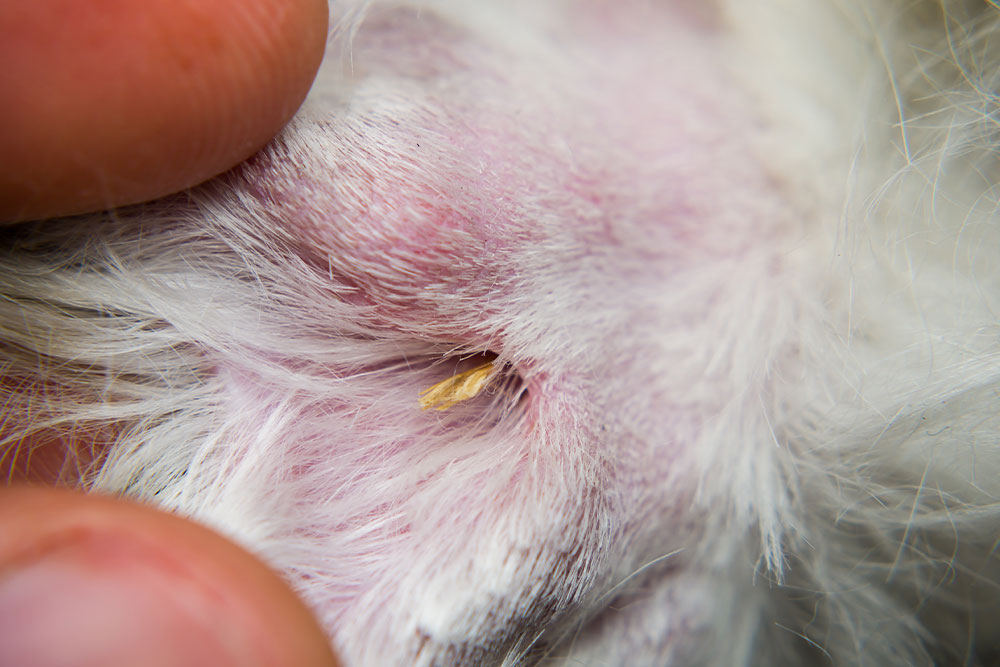
- Between the toes: constant licking, limping, swelling
- In the ears: head shaking, scratching, foul odor
- In the nose: sneezing fits, nasal discharge, pawing at the face
- In the eyes: squinting, redness, tearing
- Under the skin: tender lumps or oozing wounds
Even the genital area and gums can be affected. Awns that migrate under the skin may not show until they erupt in a different location, creating confusion for owners and requiring imaging to locate the true source. Catching these early signs after outdoor play makes all the difference.
Subtle Warning Signs After Outdoor Play
Sometimes, symptoms are not obvious at first. Keep an eye out for:
- A sudden limp or refusal to bear weight
- Head shaking or tilting to one side
- Persistent sneezing or coughing
- Localized swelling with no clear cause
- Small wounds that will not heal
These early signs can appear hours or even days after exposure. Because awns continue to move forward, waiting can allow them to reach deeper tissue where removal becomes much harder. If you notice any of these changes, same-day evaluation is best. Milford Animal Hospital offers emergency care during open hours so we can help your pet promptly.
How Milford Animal Hospital Diagnoses and Treats Awn Injuries
Because awns are designed to burrow, professional care is essential. Our AAHA-accredited hospital uses advanced tools to identify and remove these hidden threats. A visit may include:
- Comprehensive exam of paws, ears, eyes, and nose
- Sedation to allow a pain-free, detailed search
- Digital imaging such as ultrasound or CT scans for deeper seeds
- Surgery or endoscopy if the awn has migrated into tissue
- Cultures to identify bacterial infections
- Laser therapy to reduce inflammation and support healing
Foxtails and other grass awns often lodge in places that are especially delicate, such as inside the ear canal, deep up the nose, or behind the eyelids. Removal in these areas requires heavy sedation or anesthesia so the pet remains completely still and pain-free. Awns in the eye can scratch the cornea, creating ulcers that threaten vision. In the nose, they may cause violent sneezing fits or even migrate toward the lungs. In the ears, they can rupture the eardrum and lead to chronic infection if not addressed quickly.
Even with careful searching, grass awns are not always found on the first attempt. They may be buried deeper than expected, or there may be more than one awn present in the same area. Because the barbs are designed to move forward, an awn can travel farther into tissue in just a few hours, making repeat exams necessary if symptoms continue.
Almost every case of foxtail injury results in infection, since the awn carries bacteria deep under the skin or into body cavities. For that reason, antibiotics and pain control are standard parts of treatment, and follow-up monitoring is just as important as the initial removal. Rechecks allow us to confirm that all awn fragments are gone, the infection is resolving, and no new abscesses or draining tracts are forming. Without follow-up, a missed fragment can cause symptoms to flare up again weeks later.
Our goal is to locate and remove the entire awn before it can migrate further, minimize the risk of long-term damage, and provide careful aftercare until your pet is truly healed.
Prevention Strategies That Really Work
While no prevention method is perfect, consistent habits dramatically reduce risk:
- Stay on mowed trails and avoid weedy fields
- Check paws, ears, eyes, and groin after every outing
- Keep fur trimmed around ears, paws, and face
- Regular grooming for long-haired breeds prone to awn problems
- Use protective gear like Outfox hoods or boots during hikes
Because awns can attach quickly, grooming and inspection right after outdoor play are critical. For routine trims, brushing, and help keeping coats clear of seeds, we offer professional grooming services.
Quick Post-Adventure Checklist
After every outdoor walk or hike:
- Comb through leg feathers and tails
- Spread each paw pad to check between toes
- Look inside ears with a flashlight
- Check gums for lodged seeds
- Watch for sneezing, licking, or sudden limping
These few minutes of inspection can prevent weeks of antibiotics, repeated re-checks, or an unexpected surgical bill. Owners who make this part of their routine often catch awns before they cause deeper problems.
FAQs About Grass Awns
Do awns ever work themselves out?
No. The barbs only move forward, not backward.
Are they only a summer problem?
Peak season is spring through fall, but mild Delaware winters mean awns can remain dangerous year-round.
Are cats at risk?
Yes. While cats groom more thoroughly, outdoor or long-haired cats are still vulnerable.
Can grass awns be life-threatening?
Yes. If an awn reaches the lungs, chest, or brain, the infection can be severe and even fatal.
How soon should I call the vet?
The same day you notice symptoms. Early removal prevents serious damage and reduces the need for invasive surgery.
Protecting Pets from Hidden Outdoor Hazards
Regular inspections after outdoor play, consistent grooming, and awareness of subtle changes in your pet’s behavior all make a difference. And if you ever suspect an awn injury, it is always safer to have your pet examined right away rather than wait.
If you notice limping, sneezing, head shaking, squinty eyes, or wounds that do not heal, contact us or call Milford Animal Hospital. Our AAHA-accredited team combines advanced diagnostics, skilled surgical care, and supportive therapies like laser treatment to restore comfort and prevent complications. Acting quickly protects your pet’s health and helps keep outdoor adventures safe and worry-free.




Leave A Comment