


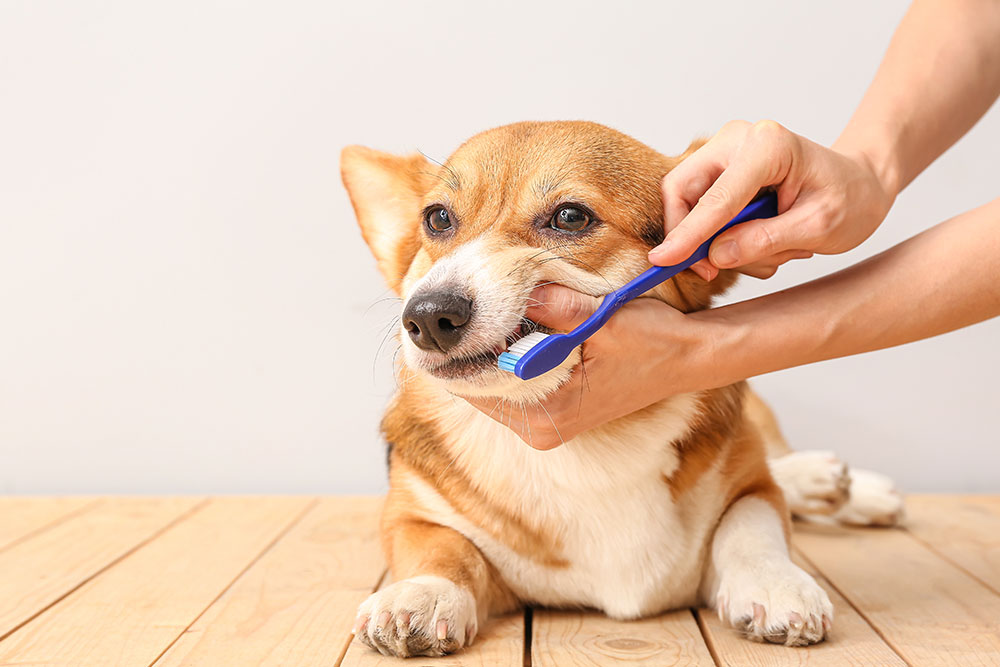
A toothbrush is still the most effective tool for your dog or cat’s teeth, but it is not the only one that helps. Plaque starts hardening into tartar within a couple of days, so whatever you use has to happen consistently to matter. Wipes and gels do less than bristles, yet a wipe used most nights beats a toothbrush sitting untouched in a drawer. The goal is a routine you will actually keep, backed by professional cleanings when tartar gets ahead of you.
Client education sits at the heart of our philosophy at Milford Animal Hospital, so we would rather show you what works than leave you wrestling a toothbrush and an unhappy pet alone. Our advanced dental care for dogs and cats begins at the wellness exam, where we check for tartar, sore gums, and broken or loose teeth, then point out where a brush, wipe, or gel will do the most good. When home care cannot keep up, our dental X-rays and professional cleanings reset the clock. Reach out for a dental consultation and we will help you find a routine your pet will actually tolerate.
Brushes, Wipes, and Gels in Brief
- Daily brushing is the single most effective thing you can do at home, but doing something most days beats doing nothing perfectly.
- Wipes, gels, water additives, dental diets, and approved chews all help, and they work best stacked into one routine rather than used alone.
- The VOHC seal is your shortcut to products with real proof behind them, whatever the package promises.
- No home care removes hardened tartar below the gumline, so cleanings under anesthesia stay part of the plan no matter how diligent you are.
Why Does My Pet’s Home Dental Care Matter?
Home care matters because it interrupts a chain reaction that starts within days. Plaque, a sticky film of bacteria, coats the teeth constantly. If it isn’t disrupted, it mineralizes into tartar and slips under the gumline, where the real damage happens quietly. That smell when your dog yawns is usually the first clue.
Down at the roots, periodontal disease destroys the tissue and bone anchoring each tooth. It begins as gingivitis, meaning reddened and inflamed gums, and can progress to loose teeth, painful infection, and tooth loss. The same bacteria can also spill into the bloodstream and strain the heart, kidneys, and liver.
Home care slows the buildup, but professional dental cleanings under anesthesia are still the only way to remove hardened tartar below the gumline and check for damage you can’t see. Think of daily care as keeping the fire small and professional cleanings as putting it out. As an AAHA-accredited hospital, we follow dental standards that treat home care and professional cleanings as two halves of the same plan.
What Makes Toothbrushing the Gold Standard?
Brushing wins because it’s mechanical. Nothing else physically scrapes that bacterial film off the enamel and away from the gumline the way bristles do, and disrupting plaque before it mineralizes is the whole game.
Why Is Brushing More Effective Than Anything Else?
Plaque stays soft and easy to remove for a day or two, then hardens into tartar that only a scaler can touch. Daily brushing gives the best protection, but every other day still delivers real, measurable benefit, and three or four times a week beats an ambitious plan that collapses after a week.
How Do I Get My Pet Started With Brushing?
Start slower than you think you need to, and build in stages:
- Touch the muzzle and lift the lip for a second or two, reward calmly, and stop there for a few days.
- Offer a taste of pet toothpaste on your fingertip so the flavor becomes something your pet looks forward to.
- Move to a finger brush, working only the front teeth at first.
- Graduate to a full toothbrush once your pet is comfortable, reaching back toward the cheek teeth over the following days or weeks.
Cooperative care techniques turn each session into something your pet chooses to sit through rather than endures. Always use a pet-formulated enzymatic toothpaste and never the human version. Human formulas contain fluoride and foaming agents that upset a pet’s stomach, and some contain xylitol, a sweetener that is seriously toxic to dogs.
The mechanics of brushing dog teeth come down to lifting the lip, angling the bristles toward the gumline, and reaching the big cheek teeth in back where plaque piles up fastest. Brushing cat teeth works best with a tiny finger brush and sessions short enough to end before your cat loses patience. Puppies and kittens adapt fastest of all, so starting young makes brushing normal instead of a battle. Our puppy and kitten wellness plans build those early mouth checks into visits you’re already making.
A few common mistakes sink a routine: pushing too hard on day one, forcing a stressed pet to hold still, aiming for a full mouth brushing before the basics are comfortable, and ending on a bad note instead of a treat. Thirty good seconds most days beats a two-minute wrestling match once a week. If you’d rather see it in person, book a brushing lesson and we’ll show you the angle and strategy for your pet.
Can I Use Dental Wipes or Gauze Instead of a Brush?
Wipes and gauze are a legitimate plan B, especially for cats and anxious pets who treat a toothbrush like a personal insult. Wrapped around a finger, they use friction to lift surface plaque off the outer tooth surfaces, and one used most nights helps.
The tradeoff is reach. A wipe can’t slip along the gumline or curl around the back molars the way bristles do. For many pets they’re a stepping stone to a brush, and for cats who will never accept bristles, they’re a reasonable long-term routine. Once tartar is visible or the gums look angry, though, wipes alone aren’t enough, and a professional cleaning is the next step.
Do Dental Gels, Sprays, and Enzymatic Products Really Work?
Enzymatic gels, powders, sprays, and pastes work chemically, breaking down plaque and slowing the bacteria that drive disease even without brushing. They won’t match bristles, but they’re a real help for pets who refuse mechanical cleaning altogether, and they raise the value of whatever brushing you do manage.
Application is low-drama. Gels get smeared along the gumline with a finger, sprays go onto the teeth, and powders sprinkle over food. Many need no rinsing at all. Used alone, these products slow disease but rarely stop it. Stacked with a brush or wipe, they add up.
Are Water Additives and Oral Rinses Worth It?
Water additives and oral rinses deliver antimicrobial or enzymatic ingredients throughout the mouth as your pet drinks, aiming to reduce plaque and freshen breath. They’re the most passive option on the menu. Effectiveness varies enormously between products, so they belong alongside mechanical cleaning rather than in place of it.
You add a measured amount to the bowl and you’re done, but palatability is the catch, since some pets notice the taste and drink less. Introduce any additive gradually, a fraction of the dose at first, while you watch that your pet keeps drinking normally. One caution: if your pet has bladder or kidney issues, some additives aren’t appropriate, so ask us before you add one to the bowl and we’ll tell you whether it fits.
How Do Dental Diets Help Fight Tartar?
Dental diets fight tartar two ways at once, through what the kibble is made of and how it’s shaped. Some dental diets use a larger, fibrous kibble that lets the tooth sink in so the surface gets wiped clean instead of shattering on contact. Others add ingredients that keep minerals in saliva from hardening into tartar.
For a pet who eats dry food anyway, that’s real dental benefit for zero extra effort. Keep it in perspective, though: a diet stretches the time between cleanings, it doesn’t erase the need for them.
Which Dental Chews and Toys Are Safe and Effective?
The right chews help by mechanical action, scraping plaque off the tooth surface as your pet gnaws, but the wrong ones crack teeth. The rule is simple: a safe chew bends or gives slightly under pressure. If you can’t dent it with a thumbnail, it’s too hard for teeth.
Here’s how the pieces sort out:
- Chews to avoid: Steer clear of chews hard enough to crack teeth like real bones, antlers, and hooves.
- Toys that fit: Sizing matters just as much. Safe chew toys are pliable enough to protect the teeth and large enough that they can’t be swallowed whole, so match the chew to your pet’s size and chewing style.
- Toys that clean: Certain dental chew toys are molded with ridges and nubs that scrape plaque from the tooth surface while your dog gnaws, adding a boost between brushings.
Supervise chew time, watch for pieces small enough to swallow, and check that the chew isn’t upsetting your pet’s stomach. If a chew does crack a tooth, that’s painful, so we offer same-day care for a cracked tooth during our open hours.
What Is the VOHC and How Do I Choose Products That Work?
The Veterinary Oral Health Council, or VOHC, is an independent body that reviews dental products and awards a seal only to those proven to reduce plaque or tartar. In a category where marketing runs well ahead of the evidence, that makes VOHC-accepted products the single most useful thing to look for on a package. The seal shows up across the whole category, so you can use it whether you’re choosing chews, water additives, diets, wipes, or gels. If you’re not sure which suits your pet, ask us and we’ll point you to one that fits. Our online pharmacy stocks the toothpastes, wipes, and rinses we recommend most, so you’re not guessing from a store shelf.
| Home care method | What it does | Best for |
| Toothbrushing | Mechanically removes plaque at and below the gumline | The daily gold standard for most dogs and cats |
| Wipes or gauze | Lifts surface plaque by friction on outer surfaces | Cats and pets who refuse a brush |
| Gels, sprays, powders | Breaks down plaque chemically | Adding to brushing or wiping |
| Water additives | Delivers antimicrobial ingredients as pets drink | Passive, hands-off support |
| Dental diet | Scrubs teeth and slows tartar formation | Pets who eat dry food anyway |
| Approved chews | Scrapes plaque during chewing | Dogs who love to gnaw |
What Can’t Home Care Do on Its Own?
Even flawless home care can’t remove hardened tartar or reach the disease below the gumline, which is why cleanings under anesthesia stay essential. Anesthesia lets us scale away tartar above and below the gumline, polish the enamel, probe each tooth for pockets, and take dental X-rays of the roots, none of which is possible on an awake pet.
Anesthesia-free dentistry is marketed as a gentler alternative, but the risks of anesthesia-free dentistry are real: it cleans only the visible crown while disease festers below the gumline.
Some Dental Problems Home Care Can’t Prevent
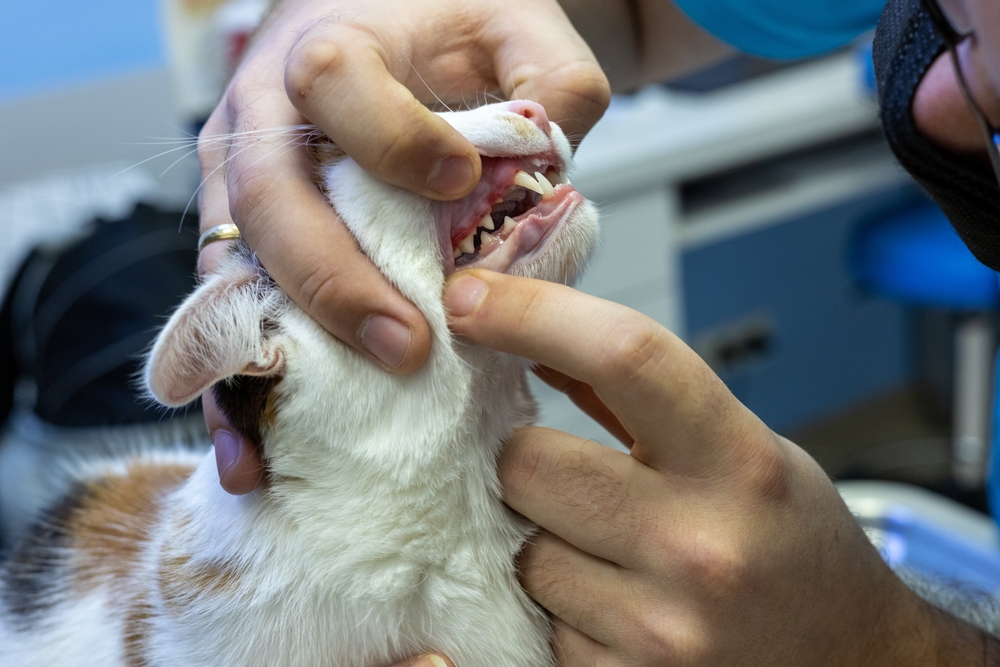
A few conditions have nothing to do with plaque, and no amount of brushing will head them off. Tooth resorption is the big one in cats, where the body slowly breaks the tooth down from the inside out. It’s common in adult cats, it’s genuinely painful, and it often hides under a gumline that looks fine. Fractured teeth and retained baby teeth fall in the same category. None of that makes home care pointless, but it does mean a diligent routine is no substitute for full-mouth dental radiography, which is the only way to see what’s happening at the roots.
How often your pet needs an anesthetized dental cleaning depends on their breed, age, and how fast they build tartar, which we sort out together.
How Do I Build a Dental Routine I Can Stick To?
A routine sticks when you anchor it to something you already do and keep the bar low enough to clear on a busy night. Brush right after your own evening teeth, when you fill the water bowl each morning, or after the last walk of the night. Add layers once that’s automatic. On a night when brushing just isn’t going to happen, reach for a chew, a spray, or a water additive, with a sprinkle of dental powder on dinner. The goal is a mouth cared for most days, not a perfect record.
Progress takes weeks, not days. And when you’re ready for us to look, our exam pricing is posted up front, so you know what a visit runs before you book.
Frequently Asked Questions About Pet Dental Home Care
How often should I brush my dog or cat’s teeth?
Daily is the goal, and every other day still delivers real benefit. The best schedule is the one you can keep, so pick a frequency that fits your life rather than aiming for perfect and quitting when a busy week gets in the way.
Would my pet stop eating if their teeth really hurt?
Usually not, and that’s the part that catches families off guard. Dogs and cats are remarkably good at hiding oral pain, and most keep eating right through advanced dental disease because the drive to eat outweighs the discomfort. Waiting for a change in appetite means waiting too long. Subtler clues are more reliable: chewing on one side, dropping kibble, turning away from hard treats or toys, pawing at the face, or simply going quieter and less playful than usual.
My cat hates having their mouth touched. What are my options?
Plenty of cats feel that way, and you have real choices. Start with a dental wipe or a fingertip of enzymatic gel, which many cats tolerate far better than bristles, and build up in very short sessions with a treat afterward. A VOHC-accepted water additive or dental treat adds passive help with no wrestling. Even partial success counts: if your cat only lets you reach the outer surfaces of the front teeth, that’s still meaningfully better than skipping home care.
Is bad breath just normal for pets, or is it a problem?
Persistent bad breath isn’t normal; it’s usually the first sign of dental disease. A little food smell right after eating is one thing, but breath that consistently makes you lean back is worth a look. It often means tartar and gum inflammation have set in, and catching it early means a simpler cleaning and less discomfort for your pet down the road.
Let Us Help You Build a Routine Your Pet Will Keep
The best dental plan is the one that fits your real life: a brush most nights, a chew or wipe on the busy ones, an approved product or two to fill the gaps, and a professional cleaning when your pet needs a reset. You don’t have to figure out the mix alone, and you don’t have to get it perfect to make a real difference.
We’d love to show you the technique, help you pick products that have earned their claims, and build a plan around your individual dog or cat. Schedule a dental consultation at Milford Animal Hospital and we’ll check your pet’s mouth, answer your questions, and set you both up with a routine that lasts.




Leave A Comment