



Some of the most popular toys, chews, and collars on the shelf can genuinely hurt your dog, and these injuries are not rare. A dense chew can crack a tooth in a single bite. A swallowed toy fragment can block the intestines. A collar that snaps tight on the neck can bruise the windpipe. Some of this happens in one dramatic moment, and some builds quietly over months of the wrong chew. The hard part for any shopper is that the packaging almost never tells you which products carry real risk.
Milford Animal Hospital in Milford, Pennsylvania is AAHA-accredited, and we believe that high-quality medical care should be accessible to every pet owner. When a chew or toy does cause trouble, our emergency and urgent care brings the imaging, endoscopy, and surgical capability to find the problem and fix it quickly, often the same day. If you would rather head off trouble before it starts, get in touch with our team and we will help you sort the safe gear from the risky. We treat education as a key part of every visit rather than an afterthought.
The Essentials
- Many everyday products, including dense chews, toys that break apart, and collars that tighten, cause injuries we treat at Milford on a regular basis.
- A chew hard enough to crack a tooth almost always leads to an extraction, which is why the thumbnail test is worth doing before you buy.
- A swallowed toy piece can travel from a stomach we can reach with endoscopy to an intestinal blockage that needs surgery, sometimes within hours.
- Reward-based training and well-fitted walking gear reach the same goals as prong, choke, and shock collars, without the injury risk.
What Gear-Related Injuries Do We See Most Often?
The gear that brings dogs into our hospital tends to fall into three groups: cracked teeth from chews that are too hard, swallowed pieces of toys and chews that lodge in the gut, and neck or windpipe strain from collars and leashes. Each one is common, each is largely preventable, and each is far simpler to treat when we catch it early.
What makes these injuries frustrating is how ordinary the products are. None of them look dangerous on the shelf. The table below is the quick version of what we see and how an AAHA-accredited hospital works the problem up.
| Everyday item | What can go wrong | How we find or treat it |
| Hard chews (real bones, antlers, hooves, nylon) | Fractured or slab-fractured tooth | Oral exam and digital dental X-ray, with extraction when the pulp is exposed |
| Toys that break into pieces | Swallowed fragments, intestinal obstruction | Imaging to locate the piece, then endoscopic retrieval or surgery |
| Tightening collars, retractable leashes | Bruised windpipe, neck and spine strain, lacerations | Exam, and imaging when breathing or swallowing is affected |
The reassuring part is that all three categories are manageable, and the most serious outcomes almost always trace back to a delay in coming in. Below, each category (chews, toys, collars, and leashes) gets its own section, with what makes a version risky and what to look for instead.
How Does a Chew Crack a Dog’s Tooth, and What Happens Next?
A chew cracks a tooth when it is harder than the enamel pressing against it, and dogs generate enormous force with their back teeth. The large upper chewing tooth, the carnassial, fractures most often, and once the inner pulp is exposed the tooth is painful and prone to infection. That tooth almost always has to come out.
The chews most likely to do this are the ones marketed as long-lasting, because hardness is exactly what makes them last:
- Cooked bones: brittle and prone to splintering, which causes mouth injuries and gut perforations.
- Raw or real bones: high fracture risk for that carnassial tooth, and a frequent reason for extractions.
- Antlers and hooves: classic culprits for slab fractures of the premolars, often found weeks later.
- Hard nylon bones: can be gnawed into sharp points that scrape or perforate the gut.
- Rawhide: softens into a dense wad that can lodge in the esophagus or intestines.
- Any chew worn down to a nub: small enough to swallow whole and choke on.
Popular chews carry real risks, and they tend to be the densest ones on the shelf. A simple screen helps: if you cannot dent it with a thumbnail, it is probably too hard for your dog’s teeth. Some dogs will chew gently on a nylon bone or antler and never crack a tooth; others chew so aggressively that they break a tooth on day one. Watching how hard your dog chews and matching toys to their style is a big part of prevention, and our team can help you understand what’s safe for your pet.
Dogs are very good at hiding a cracked tooth, so watch for the quieter signs:
- A discolored, broken, or chipped tooth you notice during a face rub.
- Chewing on only one side, or dropping food.
- Wearing of the tips of teeth.
- Excessive drooling or pawing at the mouth.
- Breath that suddenly turns sour.
When something looks off, our dental care for dogs in Milford includes digital radiography to see below the gumline, where most of the damage hides, and the equipment to treat or remove a fractured tooth in one visit.
What Happens If Your Dog Swallows Part of a Toy?
It depends on the size of the piece and where it travels. A small fragment sometimes passes uneventfully, but a larger piece, or a strip of rope, can lodge in the stomach or saw through the intestine. At that point it becomes a gastrointestinal foreign body, which can turn from uncomfortable to life-threatening within hours.
The toys most likely to end up swallowed:
- Rope toys: chewed-off fibers form linear foreign bodies that bunch and cut the intestine.
- Squeaker toys: once the squeaker is exposed it becomes a choking hazard or a swallowed object.
- Undersized toys: anything smaller than the mouth can be gulped whole.
- Hard plastic toys: crack teeth and shed sharp shards.
- Stuffed toys: the filling clumps and blocks the gut.
- Abrasive toys: some textured surfaces, like tennis balls, grind enamel down to the sensitive dentin.
This is where an AAHA-accredited hospital with advanced tools changes the story:
- Still in the stomach: our endoscopy can often retrieve the piece without a single incision.
- Moved into the intestine: digital imaging and a CT scan help us locate and characterize it.
- When an operation is the safer route: our team handles those surgery cases in-house.
A few habits keep most swallowing emergencies from ever starting:
- Replace worn toys before they begin shedding pieces.
- Supervise new toys until you know how your dog plays with them.
- Size up: if it fits entirely in the mouth, it is a swallowing risk.
- Rotate the toy bin so a few items stay interesting instead of everything being destroyed at once.
Can a Collar or Leash Actually Hurt Your Dog’s Neck?
A collar or leash can absolutely strain or injure the neck. The windpipe and the structures around it sit right under a dog’s collar, so a hard jolt against the throat can bruise the trachea or strain the neck, especially in small breeds and dogs with existing airway or disc problems. The everyday culprit is sudden force: a lunge, a yank, or a dog hitting the end of a long lead at full speed.
Retractable leashes earn a warning of their own:
- They reward pulling: the lead extends exactly when the dog pulls, teaching the opposite of what you want.
- They surrender control: your dog can be sixteen feet away when something goes wrong.
- The thin cord injures: retractable leashes cause cuts and friction burns to dogs and people, and serious retractable-leash injuries include deep lacerations and even amputations.
- The handle can rip free: a hard lunge can tear it from your hand and send it clattering after your dog.
Which Training Tools Should You Skip, and Why?
Skip the tools that work through pain or pressure: prong collars, choke chains, and shock collars. They can suppress a behavior in the moment, but they do it by hurting or frightening your dog, and they carry real physical and emotional risks while leaving the underlying cause untouched.
The pressure collars bring specific physical risks:
- Tracheal damage from a sudden tightening lunge.
- Neck and spine injury, especially with existing disc disease.
- Skin punctures from the prongs themselves.
Prong collars are especially risky for dogs with tracheal collapse or disc disease, and training-collar injuries can be severe. Shock collars add their own problems:
- Burns and skin damage at the contact points.
- Worse fear of whatever the dog was looking at when the shock landed.
- Rising aggression when the dog links the pain to the environment instead of to their own behavior.
Aversive training methods tend to make the target behavior worse over time, not better. The alternative works better and lasts: positive reinforcement training rewards the behavior you want, so your dog chooses it on their own. For a puller, that means rewarding a loose lead until polite walking becomes the default.
For a dog that reacts to others, structured work like the engage-disengage game and other positive-reinforcement approaches to reactive behavior reshape the emotion underneath the reaction, instead of just masking it. Reacting on leash to other pets or people is largely a fear-based behavior; using prongs or shock to discipline that behavior simply adds more negativity to a situation where your dog is uncertain or scared, worsening it over time.
What Walking Gear and Toys Do We Actually Recommend?
Gear that spreads force away from the throat and matches your dog’s build. For most dogs that means a well-fitted harness and a fixed-length leash, paired with chews and toys that pass the thumbnail test. The aim is simple: the same control and enrichment, without the injury risk.
Your harness and collar options, roughly from most to least control for a puller:
- Front-clip harnesses: redirect a puller’s forward motion, a good first choice for dogs that pull.
- Head halters: help strong pullers, but need a patient, treat-based introduction.
- Back-clip harnesses: comfortable for dogs that already walk politely.
- Martingale collars: keep narrow-headed dogs from backing out, without choking when fitted correctly.
- Flat collars: fine for ID tags and everyday wear, just not the pull point for a determined puller.
Head halters and harnesses each suit different dogs, and choosing the right collar comes down to fit and your dog’s habits. When you introduce any new gear, your dog will tell you how it feels. Lip licking, a tucked tail, pinned ears, or backing away all signal discomfort, and a basic read on canine body language makes fitting gear far easier.
For leashes, a fixed four-to-six-foot leash gives the best mix of freedom and control for polite leash walking. When you want more room for recall practice in open space, a long line of fifteen to thirty feet is the safer stand-in for a retractable.
On the chew and toy side, safer does not mean boring:
- VOHC-accepted dental chews: carry a seal that means a proven dental benefit.
- Durable rubber toys: stuff them with food and freeze them for chewing that occupies dogs without cracking teeth.
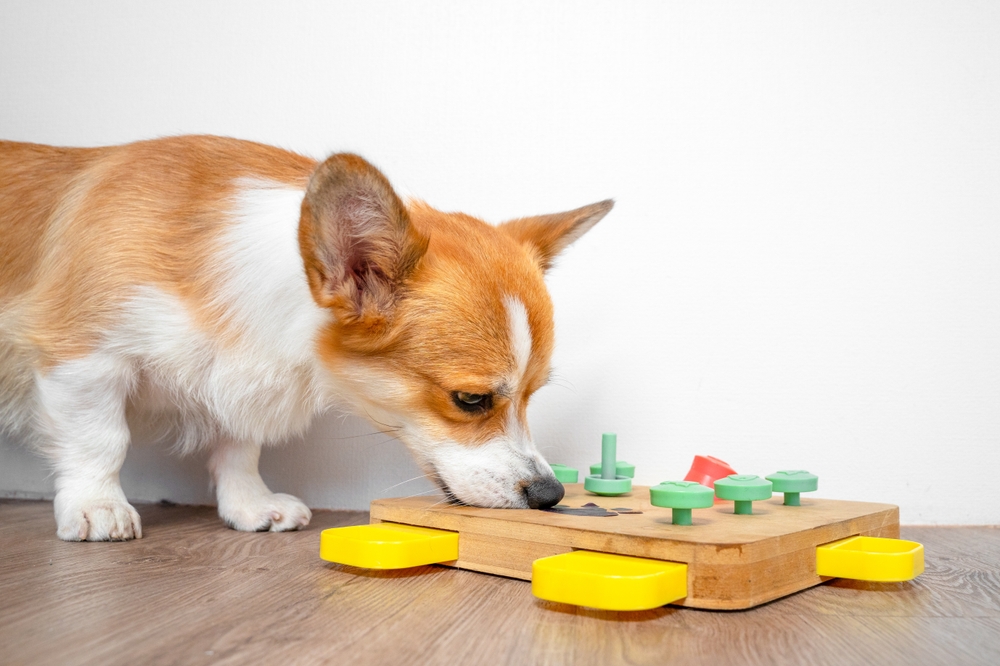
- Puzzle feeders and snuffle mats: burn mental energy through sniffing and problem-solving, while still getting food rewards.
The key to toys is supervision. Some dogs will carry around the same stuffed toy for life. Others will shred it and eat the stuffing in minutes. Some dogs will chew a bone until they are too exhausted to move. Others will just carry it around for fun. Watching how your dog interacts with a toy, and removing it when it’s a problem, is the most effective way to prevent a toy-related injury.
Could a Sudden Chewing Habit Be a Medical Problem?
A sudden change in chewing can be medical, not just behavioral. A dog that suddenly chews everything, or fixates on hard objects, is occasionally signaling that something physical is wrong. Gear choices alone will not fix a problem that started in the body, which is why a new or escalating habit is worth a closer look.
Possible medical contributors to destructive chewing include:
- Pain: some dogs chew hard for relief, including from dental pain itself.
- Cognitive change: an older dog’s new fixations can stem from age-related changes in the brain.
- Anxiety: a change at home can surface as destructive chewing.
- Endocrine or metabolic conditions: these can shift both appetite and behavior.
A wellness exam rules these out before we treat a habit as purely behavioral. Our wellness plans build in the routine visits and conversations that catch these shifts early, while they are still easy to manage.
Frequently Asked Questions About Dog Gear and Injuries
Can you remove a swallowed toy without surgery?
Often, yes, if it is still in the stomach and we see your dog soon enough. Endoscopy lets us pass a camera and retrieve many objects without an incision, which means a faster, gentler recovery. Once a piece moves into the intestine, surgery is usually the safer route, so timing genuinely matters. If you know your dog swallowed something, call us right away rather than waiting it out.
How do I know if a chew is too hard for my dog’s teeth?
Use the thumbnail test: press your thumbnail into the chew, and if it leaves no dent, the chew is hard enough to fracture a tooth. A good rule of thumb is that if you would not want to be whacked on the knee with it, it is too hard for your dog’s mouth. Antlers, hooves, real bones, and hard nylon all fail this test.
My dog cracked a tooth but seems fine. Does it still need treatment?
Almost certainly. Dogs hide dental pain extremely well, and a fracture that exposes the pulp is both painful and an open path for infection into the jaw. A dental evaluation with X-rays tells us whether the tooth can be saved or needs to come out. “Seems fine” rarely means the tooth is fine.
Are “tough” or “indestructible” toys safe for power chewers?
Against a determined chewer, no toy is truly indestructible, and the very hardest “tough” toys can crack teeth in the attempt. The better goal is an appropriately durable toy, supervised play, and replacing items before they break down. Food-stuffed rubber toys tend to work well because they reward licking and working at the food rather than destroying the toy.
Choosing Gear That Keeps Your Dog Out of Our Treatment Room
The safest gear is rarely the flashiest or the most heavily marketed, and the few minutes it takes to check a chew’s hardness or swap a retractable for a fixed leash can prevent the painful, costly injuries we treat every week. The right choices depend on your dog’s size, chewing style, and health history, which is exactly the kind of thing we talk through at a visit.
If you want a second opinion on your dog’s toys, chews, or walking gear, or you are seeing any sign of a gear-related injury, book an appointment or reach out to our team. We would much rather help you choose well now than fix a problem later.




Leave A Comment